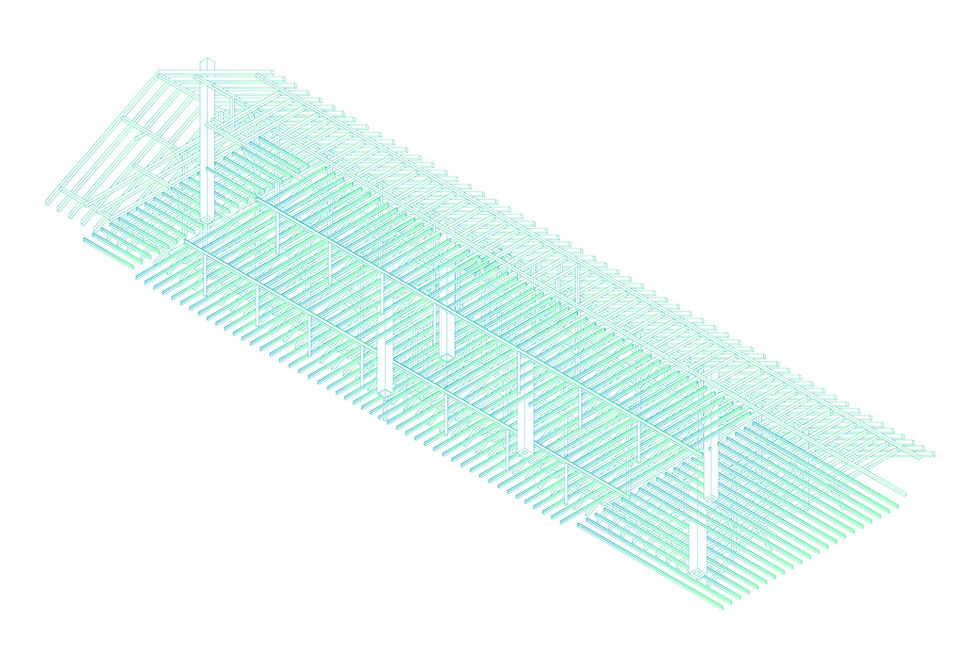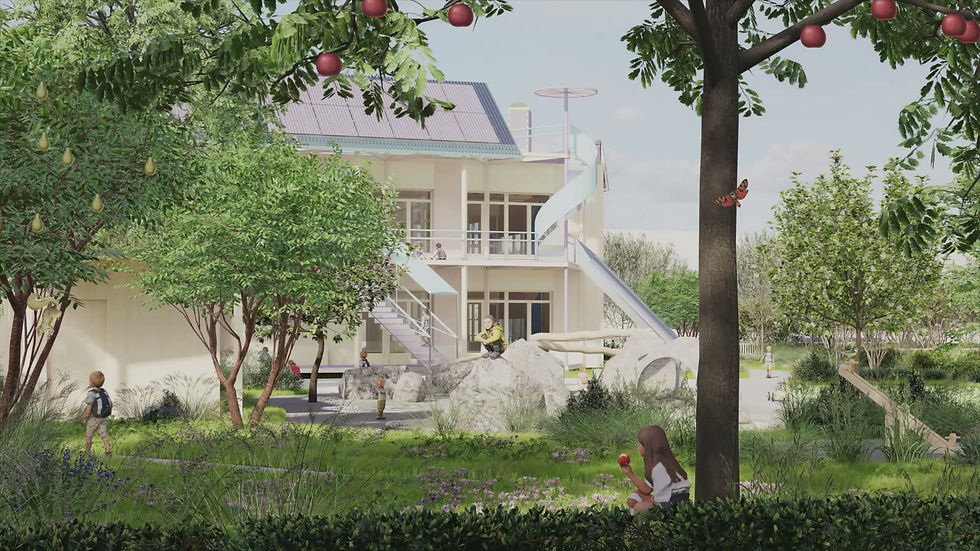
The project Summervogel (Butterfly) is built from two existing kindergarten buildings and components from regional reclaimed building material stores. Reuse is not just a material strategy, but the fundamental generator of architectural form, like the regulatory elements, making escape stairs and access galleries vibrant, everyday spaces for movement, play, and informal learning.

At the heart of the project lies the necessity to reuse materials—to conserve resources and deliberately reduce material consumption. At the same time, it seeks to develop an architecture that is both transformative and resilient: a form of building that responds to changes in life, in habits, and in needs. To create architecture means to embrace processes of transformation and translate them into space.

This residence counters the typical context of fenced-in suburban prefab housing with meticulously placed, sun-aligned openings. Its open-ended structure easily adapts to changing lifestyle models. The building's thermal mass serves as a direct response to climate change and rising heat, prioritizing low-tech solutions like nocturnal cooling. Sustainability shapes the material choice: concrete slabs, the wooden staircase, and window sections were sourced from surplus stock. Built without a basement, the house uses geothermal baskets for heating/cooling and solar panels for energy.

The pilgrimage church Mary, Queen of Peace is widely regarded as Gottfried Böhm’s magnum opus and as an epochal work of twentieth‑century architecture. Yet it has largely escaped previous reception that the church was conceived as an integral part of a broader pilgrimage district, designed by Böhm as an urban intervention—with a kindergarten, pilgrim house, hostel, and other facilities unfolding along a cascading path leading up to the church. The publication is the first to examine this ensemble in its spatial, urban, and social coherence. German and English version a


This text examines whether—and by what means—a sense of generosity in use can emerge despite a limited floor area. It concludes that the answer to a space-efficient plan may lie less in the purity of its graphic articulation than in a productive disruption that foregrounds pragmatic responses. Ultimately, it raises the question of whether it is not, in fact, our habitual modes of seeing that require transformation.